The Blagojevich legal team just can’t get their story straight

Ernie Souchak, Editor-in-Chief

The Blagojevich legal team just can't get their story straight. Most notably, they're having a difficult time coming up with a reasonable explanation for why they did not make Chicago Tribune reporter John Chase tell a jury how he knew that the FBI had a wiretap on Blago.
Such a difficult time, in fact, veteran attorney Sheldon Sorosky actually said that if he had called Chase to testify, "They would have just blamed an FBI agent" for leaking the information about the wiretap.
Let's take a minute to fully appreciate what a truly remarkable statement that is for a defense attorney to make.
Clearly Sorosky is at a loss to explain why he did not call the one witness whose testimony could discredit the very people that Blago needed to discredit, namely the FBI.
Good thing you chose not to discredit the FBI, Shelly. Otherwise the prosecutors would have regretted calling FBI agent Dan Cain as their first witness to testify against your client in BOTH of Blagojevich's trials.
Remarkable, Shelly, truly remarkable! Can anyone spell malpractice?

Blago's other legal eagles, Sam Adam and Sam Adam, Jr., have been contacted by IP2P but have not responded. If they have anything to add to Sorosky's explanation just let us know?
As for Robert Blagojevich's attorney, Michael Ettinger, his previous position was that they would have put Chase on the witness stand had they thought of it. But that has now become "I don't recall who John Chase is."
Really Michael, now you don't remember who "Golden" author John Chase is? That's peculiar considering you've publicly declared John Chase a liar.

Apparently Ettinger has now decided to rejoin the rest of the Blagojevich legal team in their silence on the subject of John Chase knowing about the FBI wiretap and receiving copies of the sealed tapes from the feds.
When you add all of the above to the fact that the media in Chicago is completely ignoring everything while posting "poor Patti Blagojevich" stories, you can only come to one conclusion:
The feds and Blago have finalized their deal, and you can expect the announcement of his early release from prison very soon.
Oh, and don't be surprised if you hear that WLS Radio has a job waiting for Blago when he gets out.
More to come......
Did Clarice Feldman just say “Plamegate was a deliberate plot by Bush and pals to distract from Iraq”?
Ernie Souchak, Editor-in-Chief

American Thinker writer Clarice Feldman is not only on record stating that Plamegate was a "hoax", she has also at one point or another accused half of Washington of being involved in a "conspiracy" against George W. Bush.
Right, Clarice. Poor George Bush and Dick Cheney were being picked on by all those bad people that worked for them. Ok. Got it.
While being questioned about her "conspiracy" theories, Feldman let loose with this unexpected gem:
" When do we get to Ernie's fantastical notion that Plamegate was a deliberate plot by Bush and pals to distract from Iraq? "
Holy cow! Where did that come from?
Clarice, we never said that "Plamegate was a deliberate plot by Bush and pals to distract from Iraq." But now that you mention it, that scenario would explain a great deal of unanswered questions.
For example:
Why would the CIA send Joe Wilson to Niger to investigate Saddam Hussein's alleged attempt to purchase yellowcake uranium, when the CIA and George W. Bush knew Hussein had 550 tons of yellowcake 19 miles outside of Baghdad?
And why were the yellowcake documents that Wilson said he read long before they were actually ever made available to anyone in the CIA such poor forgeries? Were the forgeries designed to be easily discovered?
Would a President really tolerate any high-ranking officials in his administration keeping secrets from him, especially during wartime, as Feldman contends?
Of course he would not.

President George W. Bush meets with Secretary of State Colin Powell and Deputy Secretary of State Richard Armitage at his ranch in Crawford, Texas, Wednesday, Aug. 6, 2003.
So while IP2P was trying to get Feldman to explain how she came to the conclusion that the CIA, the State Department, the Department of Justice, the FBI, and the DoJ Inspector General's Office were all involved in a "conspiracy" against President George W. Bush, she answered with this out-of-the-blue defense of Bush and his Defense Dept.
And in doing so could very well have helped solve the mystery of what the "Plamegate hoax" was really all about.
Coincidentally, the DoD is where Feldman's close personal friends Paul Wolfowitz, Richard Perle and Douglas Feith were practically running the show during the lead up to the invasion of Iraq.
Clarice, you may have really turned us on to something here. Thank You!
Blagojevich attorney Sheldon Sorosky says Blago free to talk
Ernie Souchak, Editor-in-Chief

A proven, reliable source informs IP2P that Sheldon Sorosky, Rod Blagojevich’s attorney, has confirmed what we’ve long suspected: Blago’s silence has been bought. The payoff is ahead.
Here’s how it stacks up.
Rod Blagojevich is free to talk publicly about any, and all, of the phone conversations recorded by federal agents. And, there’s no protective judicial order restricting him from doing so.
When asked why his client would pretend he’s prohibited from talking about the conversations, Sheldon had no clear explanation.
Sheldon was then asked: If the contents of the tapes prove Blago is innocent, why has Blago remained silent? Sheldon has no clear explanation.
When asked if Rod Blagojevich's pending appeal would be based on the claim that the defense could not play the tapes, Sheldon said that the appeal would focus on specific tapes.
Oh, okay.
Then, Sheldon was asked – why, if those specific conversations would prove Blago innocent, hasn’t Blago identified those with whom he had those conversation, and what those conversations were about, Sheldon acknowledged that nothing restricts Blago from revealing that information.
Oh, okay, nothing stops Blago from talking. We get that.
Asked why Blago hadn’t revealed what’s on the tapes, Sheldon had no clear explanation. (You see a pattern here?)
Here’s what we at IP2P suggest: Sheldon should just put Blago's recollection of those conversations in his appellate brief due May 30, 2013.
Absolutely nothing prevents him from doing that.
Nothing, that is, unless there’s a deal in place that assures that the public never knows what’s on those tapes, in exchange for a significant reduction in Blago’s jail time.
In short, we believe Blago's silence has been bought.
It is the Chicago Way. Right?
The underlying question is this: Besides getting himself an early Out-of-Jail Card, who is being protected by Blago’s silence?
Developing…..
Robert Blagojevich dodged going to prison
Hugo Floriani, Investigative Reporter

Jesse Jackson Jr. was not the only one saved when John Chase called the Blagojevich camp and warned them that the feds were listening.
Remember, it was Robert Blagojevich that would have been caught on surveillance tapes, meeting with Jackson's money man, Raguveer Nayak. Chase not only saved Jesse Jackson, Jr. from prison, he also saved Robert Blagojevich.
Hold that thought. We'll come back to it later.
November 21, 2012: Within hours of Jesse Jr's resignation from Congress, Robert Blagojevich expressed his disappointment. He felt he likely would never be able to clear his own name.
Why is that? you ask.
Well, R. Blagojevich assumed there'd be no ethics committee investigation of Jesse Jackson Jr's attempt to buy the U.S. Senate seat his brother, then Governor Rod Blagojevich, was selling.
Robert was right. The DC pols didn't want to investigate that attempted transaction.
However, there's nothing to stop Robert Blagojevich from making his case to the public.
That is, if Robert truly believes his name could be cleared.
Robert Blagojevich has all the FBI wiretap tapes that brother Rod and his attorneys have.
Robert has listened to all the government's wiretaps, and, as of today, he hasn't expressed any disagreement with Chase and Coen's assertion that the contents of the tapes show his brother is guilty.
Furthermore, Robert, Rod, and their respective attorneys have remained silent, while Chicago Tribune reporters Chase and Coen assert that the Blagojevich defense was built on a house of lies.
Remember, the entire Blagojevich entourage was screaming that "the tapes would set them free," if only everyone could hear them.
In their book "Golden," Chase and Coen claim they listened to all the wiretap tapes, and that there is nothing there that suggest Rod or Robert are innocent of attempting to sell a U.S. Senate seat.
So, in a nutshell:
In the past.
The Blagojevich brothers and their attorney's repeatedly professed that proof of their innocence is captured on the government's tapes. And that, if the public were allowed to hear the tapes, the brothers would be found innocent.
Present day.
(1) John Chase and Jeff Coen claim that the Blago's and their attorney's were lying.
(2) The Blago brothers and their attorneys are not disputing Chase and Coen's claims.
Conclusion:
The Blago's and their attorney's lied about what's on the tapes.

So, what will the Brothers and their attorney's want you to believe next? (coming soon)
Questions:
(1) What was captured on roughly 400 hours of recorded Blago wiretap conversations?
(2) Why can't we hear them?
(3) Why are the Blagojevich's and the U.S. Attorney's Office hiding behind a phony protective order?
Developing story......
The Valerie Plame Case: Why was Patrick Fitzgerald appointed Special Counsel?
Hugo Floriani, Investigative Reporter & Ernie Souchak, Editor-in-Chief
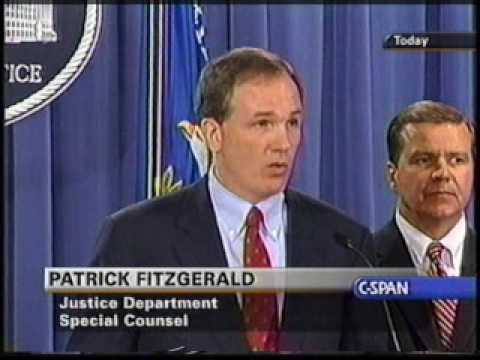
It's been documented that Deputy Secretary of State Richard Armitage was the source of the so called "leak" of Valarie Plame's identity as a CIA employee to the press.
And, that the FBI and the Attorney General's office was well aware that Armitage was the "leaker" before appointing Patrick Fitzgerald "Special Counsel" to look for an answer they already knew.
The lingering essential question is. Why was Patrick Fitzgerald appointed Special Counsel? And, why would a prosecutor tell the known guilty party not to tell anyone of his confession?
Isn't that the opposite of how prosecutors usually operate?
In a situation like that, wouldn't the Attorney General simply determine whether Armitage broke the law or not, and either charge him with a crime or close the case?
Why would the Bush administration's Attorney General appoint a Special Counsel when Richard Armitage had already confessed?
Let's imagine that the whole Valerie Plame case was staged? Who would benefit from the appointment of Patrick Fitzgerald as Special Counsel in a case that was already solved?
Wouldn't it be the same people who benefitted from U.S. Attorney Patrick Fitzgerald being put in charge of the 10 state investigation of ACORN that could not be avoided? An investigation that was suspiciously a dismal failure.
The Democrats benefitted, with Barack Hussein Obama being the biggest benefactor. However, to be accurate, it must be said that those who benefitted the most from Patrick Fitzgerald being appointed Special Counsel and U.S. Attorney in Illinois were anyone interested in the fundamental transformation of the United States of America. And that is inclusive of Democrats, Republican's and foreigners.
A case can, and will be made, that, Patrick Fitzgerald, in his role as U.S. Attorney of the Northern District of Illinois and Special Counsel in the Valerie Plame investigation, intentionally did as much, if not more, than anyone to insure that Barack Hussien Obama was elected President of the United States of America.
Why was Patrick Fitzgerald appointed Special Counsel? For the same reason he was appointed U.S. Attorney. To assist in the fundamental transformation of the U.S.A.
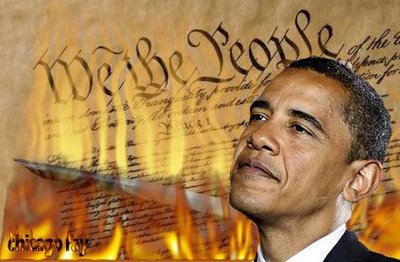
Fitzgerald was put in charge of Obama sensitive cases to assure that those cases die on the vine, be derailed, be covered-up, or be in some way diverted.
As we back up these statements with the facts, the question becomes: Will anyone in Washington DC care?
More to follow...
Rezko’s friend Dr. Ronald Michael and the State Attorney’s Office
Ernie Souchak, Editor-in-Chief
ILP2P has learned that the Cook County State Attorney's Financial Crimes Unit was not only aware of Dr. Ronald Michael before $7.2 million of government funds were deposited in Arcola Homestead Savings Bank, they were protecting Michael.
-----Original Message-----
From: (Redacted)
To: Anita Alvarez
Sent: 2009-02-09 13:19:53 +0000
Subject: Fwd: Public Trust
----- Forwarded Message -----
From: (Redacted)
To: RCopley@idfpr.com
Cc: RStearn@idfpr.com, SGinsburg@idfpr.com, DLPadron@idfpr.com
Sent: Tuesday, May 23, 2006 1:25:58 PM GMT -06:00 US/Canada Central
Subject: Public Trust
Roger:
Re: Dr. Ronald Michael's purchase of the controlling interest in Arcola Homestead Savings Bank; Arcola, IL
As you know, the I.D.F.P.R. is in possession of proof of FRAUD regarding Dr. Ronald Michael's purchase of Arcola Homestead Savings Bank.
The only question remaining is, what is your agency doing about this?
CC: Robert Stearn, Steve Ginsburg, D.L. Padron
Respectfully,
(Name redacted)
_______________________________________________________________________________
Wait, it gets better.
Even though Dr. Michael was being protected by the State’s Attorney's office, Alvarez felt free to beat her political opponent over the head with the fact that he accepted a $10K "donation" from Dr. Michael.
State's attorney candidates trade claims of tainted donors
Rob Olmstead, Daily Herald Staff
July 29, 2008
A Cook County state's attorney candidate says she's comfortable taking a small donation from an acknowledged target of an FBI investigation, saying he has never been charged with a crime.
On the flip side, her opponent says he sees nothing wrong with taking a larger donation from a man who was a friend of convicted influence peddler Tony Rezko and who was approved by state officials for bank ownership despite once having helped run a company that went bankrupt.
Welcome to the race for Cook County state's attorney.
The first donation, $500 given in June by former Chicago Alderman William Singer, was made to Democrat Anita Alvarez.
Singer was identified by federal authorities during the Rezko trial as a target of a federal investigation into a crooked land deal involving Stuart Levine and former Chicago Alderman Edward Vrdolyak.
Levine wore two recording devices to try to capture Singer on tape, but somehow both recording devices failed during his conversation with Singer, testimony showed. Defense attorneys for Rezko intimated Levine did it on purpose to protect Singer, but Levine denied that on the stand.
Singer has not been charged with any wrongdoing. A secretary at his office Monday said he was out of town and unavailable for comment.
"I think it would be highly inappropriate to keep this money," said Alvarez' opponent, Republican Tony Peraica.
But Alvarez spokeswoman Sally Daly said Alvarez does not know Singer, and in the absence of any charges thinks that an implication by Levine, an admitted liar and heavy drug user, is not enough to impugn his reputation.
"Given those circumstances, we're not uncomfortable with it," said Daly, who said Alvarez will not be returning the contribution.
Daly, in turn, criticized Peraica's acceptance in a previous campaign of over $10,000 from Dr. Ronald Michael, a friend of Rezko who contributed heavily to Gov. Rod Blagojevich and was awarded state regulatory approval to buy a bank, even though he once helped run a company that went bankrupt.
"He's [Peraica] received sizable and ongoing donations not only from people whose name came up in the Rezko trial - but people whose business practices have been scrutinized by the federal government."
She was referring to another campaign donor whose company incurred Clean Air Act violations.
"Was Mr. Michael ever under a federal investigation?" asked Peraica rhetorically. Federal officials have never publicly given any such indication.
"If you know of some (investigation), I would certainly take a look at that (returning a donation)," Peraica said.
Michael could not be reached for comment Monday.
Regarding the donor with the Clean Air violations, Peraica responded that he thinks Alvarez is "getting desperate here".
Hang on, there's still more...
At a later date, State Attorney Anita Alvarez was so bold as to attempt to set someone up for Dr. Michael. She gave the task to her best pit bull, Mr. Robert Podlasek. He just happens to be the very same attorney from the Financial Crimes Unit that is, to this day, still terrorizing Cook County political prisoner Annabel Melongo.
Alvarez's attempt in the Michael case fell short. The intended victim was familiar with "The Chicago Way" and was able to duck, so to speak. Although, that's not to say the victim escaped unharmed.
Cook County State Attorney's Office is the "Muscle" and the complicit Chicago media knows a lot more than they’re reporting. But then, what else is new?
Issa’s committee investigates Chicago USAO
<BREAKING NEWS>
Ernie Souchak, Editor-in -Chief, Illinois PayToPlay
A confidential source, familiar with the House Committee on Oversight and Government Reform chaired by Rep. Darrell Issa (R-CA), has informed illinoispaytoplay.com that Issa's committee is conducting a preliminary investigation into the Office of the U.S. Attorney for the Northern District of Illinois (USAO) pertaining to USAO leaks to the media that may represent an obstruction of justice.
The source further informs IP2P that the inquiry is focused on claims made within a recently-released book written by two Chicago Tribune reporters. The book states that the authors were given exclusive access to transcripts and tapes of government wiretaps in the case against Rod Blagojevich; and, that sensitive information had been previously leaked from the USAO to the Trib.
According to the book, one of the authors, John Chase, was chosen by his editors to notify Blagojevich that his phone calls were being monitored by federal agents. Chase completed that assignment the night before a scheduled meeting between Blagojevich and someone attempting to purchase a U.S. Senate seat for Cong. Jesse Jackson, Jr. Four days later, FBI agents arrested the then sitting Governor of Illinois at his home.
“Golden,” the whitewashing of a Department of Justice crime spree
Ernie Souchak, Editor-in-Chief, Illinois PayToPlay & Hugo Floriani, Investigative Reporter
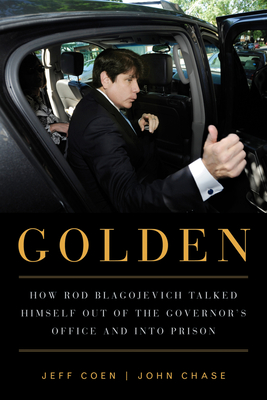
Chicago Tribune reporters Jeff Coen and John Chase wrote a 486-pages book that packs tedious and mundane details about former Illinois Governor Rod Blagojevich’s life, from birth to prison, around one key chapter that documents the role of former U.S. Attorney Patrick Fitzgerald in leaking information about his investigation of the ex-governor known nationwide as “Blago”.
The whitewash begins on the second page of the foreword entitled “Authors’ Note”: “We quote heavily from the recordings that federal agents made on phones used by the governor and others. All of those quotes come from transcripts of those phone conversations or the recordings themselves. We are grateful to those who provided case material that was outside of the public record.” (For ease of reading, we will italicize all quotations from the book.)
Those persons “who provided case material that was outside of the public record” remain unidentified throughout the book. But it soon becomes clear where they worked.
In an article written by Ernie Souchak posted on this website last September 14, we noted how the judge’s protective order, covering the transcripts of Blago’s phone conversations, stipulated that nothing prohibited Blago and his lawyers from telling his version of those recorded conversations. Blago and his attorneys were, though, ordered not to disseminate the transcripts that the feds gave them. Only the feds had permission to do that.
So, apparently, Coen/Chase secured those transcripts and recordings mentioned in the “Authors’ Note” from the feds. Here’s a question: Why was the information given to them?
Hold that thought.
The problem for the book’s core narrative – the arrest, trial and conviction of Blago – unfolds in Chapter 14 (pp. 257-295) entitled “I’ve got this thing…”
Background
On October 16, 2011, we concluded a ten-article series concerning U.S. Attorney Patrick Fitzgerald, which first posted here in on September 19, 2011, with this summary:
“So, what are the facts and circumstances that we know that collectively tend to prove, or sustain by their consistency…the hypothesis that Patrick Fitzgerald is a politically-driven, not jurisprudence-driven, prosecutor whose image as an intrepid, unbiased crime fighter is a media-created fabrication?
Here are a few headlines from Parts 1-9:
Fitzgerald acknowledged that someone leaked information to the Chicago Tribune, via a reporter for the Chicago Tribune, while the reporter, John Chase, sat mute in the front row of the news conference where the arrest of Blago was described as an effort to stop a crime spree. (Chase has told a source known to this writer that he would not identify who leaked him the information on First Amendment grounds.)
In fact, (1) Blago’s crime spree had, with Fitzgerald’s knowledge, been going on for several years. (2) Chase has not been called to account for tipping off Blago that his conversations were being recorded by the feds. (3) Eric Holder’s Department of Selective Justice has taken no steps – like that taken by Fitzgerald when he jailed Judith Miller of the New York Times in the Valerie Plame Case – to force Chase to reveal the source of the leak. And, (4) Fitz’s demeanor in discussing the leak in a press conference can be accurately described as disinterested.
The urgency to arrest Blago was manufactured out of whole cloth. The leak had to originate out of the DoJ. And, the closest outlet for the DoJ to the Chicago Tribune is Fitzgerald’s office. You connect the dots.
In retrospect, we know now that Richard Armitage was the confessed leaker in the Valerie Plame Case. We also know that Fitzgerald knew of Armitage’s confession before undertaking a long and costly investigation that convicted a key staff member of Vice President Cheney of a crime not connected to the Plame leak. And, that this media event, upon which the foundation of the Untouchable myth was built by the main stream media, was politically-driven.
The Plame “investigation” boiled down to a surrogate WWF-like wrestling match between two Big Beltway Boys: Armitage representing Powell – Libby for Cheney. With Fitzgerald as the biased referee. And, it will be so chronicled by unbiased historians in the future.
The arrest of Blago was timed, not to stop a crime spree, or the selling of a Senate seat – since the latter notion is built on the myth that, once Blago got paid for appointing someone, the act was immediate and irrevocable. The arrest was timed to save Congressmen Jesse Jackson, Jr., from criminal prosecution for bribing a governor in order to receive a Senate appointment. Connect the dots. It was about saving J.J., Junior.”
Chapter 14 – The Whitewash
The narrative here is significant, not just for what it reveals, but more for what it conceals.
The authors do not reveal the source for the information that Chase telephonically conveyed to Blago’s Spokesman, Lucio Guerrero, at approximately 10:30 p.m., Friday, December 4, 2008, namely, that the feds were listening in on Blago’s phone conversations.
Consequently, this question remains unanswered: Who leaked the information that Blago’s phone conversations were being wiretapped by the feds to the Tribune and Chase? Plus, why was that revelation leaked to the paper?
Then, why did Fitzgerald show no interest in tracking down the leaker?
We’re no closer today to answers to those questions after the 486 pages of whitewash.
Now, for the information in Chapter 14 that substantiates our October 2011 summary above:
Page 264: “Again, prosecutors noted the gravity of what Blagojevich had said. They were aware of the Balanoff meeting but had not recorded it.” (Tom Balanoff is president of the Service Employees International Union, Illinois Council, and the Vice President of its International Executive Board.)
How did the Coen/Chase know this information unless someone in the U.S. Attorney’s office gave them a blow-by-blow description of the investigation? Of course that’s what happened. The authors were scripted by the feds.
Page 267: “At the FBI’s listening room, there continued to be a mixture of thrilled disbelief and newfound resolve at what was being caught on the recordings. Agents believed they were capturing the sitting governor in incriminating conversations, and they played the calls for supervisors.
At one point, the FBI’s national director, Robert Mueller, was in town for a Chicago event. Having heard about the success of the Blagojevich operation, Mueller wanted to hear some of the recordings for himself. He stopped at the FBI’s Chicago headquarters on Roosevelt Road on the West Side near Ogden Avenue and took a seat in Rob Grant’s office. Agents had put together a disc of some of their favorite snippets for Mueller to hear.
Who was the guy dropping the F-Bombs? Mueller asked.
Well, that was the governor of Illinois, agents explained.
“You’ve got to be kidding me,” Mueller said, shaking his head, clearly pleased with how investigators were doing.”
This sounds like the testimony of an eyewitness to the event, given all the illustrative details. That eyewitness would be an employee of the FBI, or, someone from Fitzgerald’s office involved in the USAO’s investigation of Blago. This information clearly didn’t come from an audio tape or transcript of one of Blago’s intercepted calls, or from the building’s janitor.
It comes from a source intimately involved in the investigation.
Page 281: This portion of Chapter 14 explains the nature of the alleged urgency that caused the USAO to arrest Blago to, as Fitzgerald later claimed, stop an on-going crime spree.
“Fitzgerald had grown concerned that they had a sitting governor who had yet to make an appointment after working for weeks to see what he could get for himself in a deal for the Senate seat. They could let things go a little further, but it was starting to get risky that Blagojevichwould actually make a choice. Schar [Reid Schar, an Assistant U.S. Attorney, NDIL] said it would be derelict of those in the room to allow Blagojevich to make a decision. Everyone in the meeting believed the process had been corrupted, no matter how Blagojevich finally acted. To do something before he made a pick and out the investigation would at least make that corruption known, and the political could react to any pick by the governor.
In the end, there was agreement. Very soon, they would act, and likely on the morning of December 9, a Tuesday, the day before Blagojevich’s birthday and after a possible meeting the governor had been talking about with Jesse Jackson, Jr.”
What does “at least make that corruption known” mean? The USAO had been investigating Blago for years, and had compiled a substantial amount of evidence of corruption. At least, the goal should have been to arrest Blago when he accepted a bribe, and, also, arrest whoever paidthe bribe.
The real “risk” in letting Blago close a deal with the briber(s) negotiating with him on behalf of Jesse Jackson, Jr., was that they, too, would be implicated in a crime along with Blago. Whatever happened to the notion of intent to commit a crime? Blago went to jail – the briber(s) skated. That was the goal.
Pages 286-288: “’Jackson was the ‘uber African American,’ Blagojevich reminded Harris. He would consider what it would mean in black politics and how it would strengthen him, Blagojevich said, and don’t forget, third parties had offered him $1.5 million in fund-raising help.” (p. 286)
“’There’s tangible, concrete, tangible stuff from [Jackson’s] supporters,’ Blagojevich said, as Yang [Fred Yang, a pollster hired by Blagojevich] pressed him for more detail. ‘Well like, you know. You know what I’m talking about,’ the governor finally told him. ‘Specific amounts and everything.’” (p. 287)
“When prosecutors heard Blagojevich make the ‘tangible’ remark, they believed the Jackson proposal was in fact the way the governor was going to go.” (p. 288)
So, according to Coen/Chase, the feds believed that Blago was about to do a deal that would yield him $1.5 million for appointing Jesse Jackson, Jr. as a U.S. Senator from Illinois. That means that Blago was arrested to stop the commission of a specific crime, rather than to stop a crime spree.
If the USAO would have waited, both the bribee and the briber would have been caught and prosecuted. But the trap was sprung prematurely – for a reason.
Robert Blagojevich had a meeting scheduled with Jackson's money man Raghuveer Nayak on Friday, December 5. After learning from Chase, on the evening of December 4, that his conversations were being intercepted by the feds, Blago instructed his brother Robert to cancel that meeting.
The Duck Rule
If it looks like a duck; waddles like a duck; and quacks like a duck – face it, it’s a duck.
As we wrote back in October 2011: “The arrest was timed to save Congressmen Jesse Jackson, Jr. from criminal prosecution for bribing a governor in order to receive a Senate appointment. Connect the dots. It was about saving J.J., Junior.”
Remember that Jackson was the ’08 Co-chair of Obama’s Presidential Campaign Committee.
Conclusion
The book entitled Golden, written by two Chicago Tribune reporters who were granted special access to information coming from inside the investigation, is a 486-page apologia in defense of an improbable explanation behind the timing of the arrest of former Illinois Governor Rod Blagojevich.
It is a duck.
Was there a quid pro quo deal here? Did the USAO inside-leaker(s) say, “Guys, we’ll give you exclusive access to all this information, and in exchange you tell the story the way we want it told. We gotta deal?”
Don’t forget that Roland Burris, the man Blago appointed to the U.S. Senate, was the 60th vote in favor of ObamaCare. Had Blago, and those bribing him, both been arrested after the money was exchanged, would there have even been a second Senator from Illinois in the U.S. Senate when the ObamaCare vote was taken?
Rezko’s partner testifies against the Feds?
Ernie Souchak, Editor-in-Chief, Illinois PayToPlay
For the moment, Illinois PayToPlay is going to let this provocative document created by Daniel T Frawley speak for itself.
But we do want to suggest that reporting on allegations of corruption, involving government officials tied to the Rezko investigation, does not fit the the current political agenda of the Chicago Sun Times or the Chicago Tribune.
Could that be because Chicago is a "Sanctuary City" for corrupt government officials?
For the lucky politicrooks allowed to set-up shop in Chicago, there's a blanket of protection provided in large part by the two major dailies. Who protects the honest citizen?
Perhaps in 7-8 years, when it's politicly expedient, the Chicago Sun-Times will be all over this Frawley story.
From:
Date: Thu, May 10, 2012 at 7:19 PM
Subject: Fwd: FYI
To: Ernie Souchak<address withheld>
Date: Wed, Jun 1, 2011 at 7:07 AM
Subject: Fwd: FYI
To: robert XXXXX <Bob Cooley's email address withheld>
1) The USAO told Tom Durkin during Tom’s meeting with Fitzgerald, Shapiro, Ridgeway and FBI agent Jay Hagstrom that I was considered a fully co-operating witness until 2008.
The USAO was told in 2008 that I tipped him (Rezko) off that I was recording Rezko and the USAO had co-oberating evidence and because of this declination was off the table.
Tom mentioned this to me in Tom’s email to me re: the meeting at 219 South Dearborn.
1) Tom called me and asked me about the incident and I had no recollection. I did not because it did not seem important at the time and I will explain later. I went and met with Sam Doerger as well as speaking to him on the phone about it. Sam suggested I ask Jay, I did.
2) I met with Jay at the FBI office in Lisle. Jay did not give me all the details but let me know almost 99% the incident happened before Jay was assigned to the case and it happened at Tony’s office in the Sears Tower on July 3rd the year Sam retired.
SEARS TOWER MEETING WITH TONY JULY 3rd
1) I met with Sam Doerger and Mary Beth King at a Chinese restaurant on Jackson Blvd. July Fourth. During that meeting Mary Beth and Sam informed me they wanted me to wear a wire and record Tony in his office on the 95th story of THE SEARS TOWER. I told the agents of a prior meeting at the Sears Tower. (I will explain later)
2) The USAO wanted me to walk through a metal detector with metal on, bad idea.
4) Agent King to said Sam that this operation had disaster written all over it. Sam agreed and thought we should not do the taping that day. The agents were under pressure to tape Tony by the USAO.
5) I told the agents there were at least 3 levels of security of the tower
A) No one was allowed in with out having a pass and checking in with the security desk. The desk called Tony’s office to confirm the visit, I also let the agents know most of the time Rezko sent someone down from Rezmar to escort me to the office.
B) The seconded line was a metal detector everybody had to pass through
C) The third line, which I did not have, enough information about was an automatic glass door entrance that set of a green light to allow the visitor to pass. I did not know how this glass door operated or what its function was. I suggested the agents let me go over to the SEARS TOWER let me observe the security and try later that week. I was told, “No”. I then said give me a ten minute head start and let me at least get a look at it and I would figure a way through the system for the recording device.
D) The agents settled on a plan to send Mary Beth King in ahead of me. Mary Beth would gain entrance by going up to a law firm at sears Tower and then meet me on another floor and hand me the devise.
E) Mary Beth was unsuccessful. The law firm would not allow her into the Tower. I entered the tower and received permission from security and Tony to enter the Rezmar 95th floor office. I saw Mary Beth in the vestibule of the building after I received permission to enter. I could tell Mary Beth looked disconcerted. I walked past Mary Beth and dropped my AMX card and handed it to her as if she had dropped it. Mary Beth told me she could not get up to the law offices but she would try another way and meet me on another floor.
F) I went to the scheduled meeting floor and waited for 15 minute, when Mary Beth did not appear I had to go to Tony’s office. I could not just have waited indefinitely; they were expecting me because security notified Rezmar that I was on my way
I AM 99% SURE THIS IS WHAT HAPPENED/I NEVER THUGHT ABOUT IT UNTIL TOM ASKED ME AFTER HIS MEETING WITH FITZGERALD BECAUSE EVERYTHING WENT WRONG AND THE AGENTS Were AGAINST THE MEETING FROM THE START AND I WAS NOT RECORDED
1) I met with Tony in his office, by this time the FBI had been called by the Chief of Security of the Sears Tower asking what was Agent Mary Beth King doing in the Sears Tower with Dan Frawley, the jig was up and the whole thing was an avoidable disaster caused by the USAO not the agents who wanted to wait. I had no device when I met with tony and for all I knew he was aware I was with the FBI & had a recorder. I SHOT THE BREEZE ABOUT NOTHING BECAUSE I DID NOT HAVE A RECORDING DEVICE.
2) Tony asked me to take out my cell phone and disassemble it, Tony was afraid it was a recording.
3) I think that is when I handed Tony a note saying I was wiring him, which I was not and then ate the note. I thought it would work to our advantage and Tony would trust me and be more forth coming in meetings when he thought he was not recorded. The plan worked. Tony met with me for another 2 years.
4) I left the Tower and met Sam and Mary Beth, who were waiting in my Tahoe. The agents were frantic. The agents received a call to go immediately upon my return to 55 West Monroe to meet with the USAU because the head of Sears Tower Security called the FBI and was livid about what was happening. The agents never asked me what had happened they were so distraught and worried: 1) That something had happened to me 2) the whole investigation was blown 3) I would never be able to record Rezko again. 4) I never mentioned what happened in Rezko’s office because of the need of the agents were in such a hurry to get to Monroe St. that I was never debriefed. I dropped them off and it never crossed my mind and I was not asked until Tom met with Shapiro
Had I not regained Tony’s confidence that day and continued meeting with him for an additional 2 years I would not have been able to get the following would never have come to fruition?
A) Buddy Wilkins and the second set of Papa John’s books the FBI had no idea about and then later had me obtain and the FBI copied.
I) Tony plead guilty to defrauding GE Credit because of this
II) Al Chaib plead guilty based on this evidence, until then Chaib had been non-co-operative and was changing defense lawyers regularly.
III) Jack Lavin (Now Pat Quinn’s Chief of Staff) moved a line item of $3 million dollars from Panda into Papa John’s Pizza in order for Tony to get the GE loan
III) Buddy Wilkins was being bribed by Joe Duffy to withhold information from Carolyn and the grand jury! Duffy bribing Wilkins is no exaggeration. Wilkins was offered immunity to testify and Murphy advised Wilkins to turn the immunity down I was living at Maureen’s house and Maureen heard the recorded conversations with Wilkins regarding the withholding information from the grand Jury. Jay Hagstrom was aghast and knew a former USAO was bribing a grand jury witness.
Gene Murphy was Buddy’s attorney, Rezko was paying Murphy. Murphy would brief Duffy and his partners about Wilkins meetings with the FMI and USAO. Murphy would give Rezko’s attorney’s information before it Murphy gave it to his client Wilkins; this was confirmed to Wilkins by Murphy’s legal secretary Diane.
V) USUA Carolyn McNiven used my information to have Murphy removed as Buddy’s attorney as a conflict of interest.
VI) Richard Friedman the bribery and co-operation replaced Murphy with Tony’s attorney’s continued until I got the information on tape that Carolyn wanted. !) The FBI arrested buddy in North Carolina. 2) Buddy was taken back into custody and returned to Chicago. 3) Buddy testified truthfully in front of a grand jury. 4) Buddy was not prosecuted.
1) Tony and his wife both left the USA. Tony’s wife left without the FBI knowing and they were very embarrassed about this. I knew because I had a contact at O’Hare who informed me. I am the one who let the USAU know Mrs. Rezko left the USAO to meet Tony.
2) I tracked Tony all over the world for the FBI for 4 months when they did not know where he was. I got info form my contact at Jordanian Airways and I knew the hotels where he stayed and I got to know the hotel staff that gave me all of Tony’s travel plans. I think I also played a role in talking tony into returning to the US.
3) Weaver asked Steve Blanc to handle negotiations of my repayment from Rezko with Rezko’s attorney, Steve thought this was Weaver’s role and not his, but Steve agreed to do so. We now know why Weaver asked Steve.
4) Steve and I were able to get from Tony’s attorney, Howard Adelman the routing of $3,500,000 in funds from a Syrian Bank to a Beruit Bank to a Belgium bank to a Toronto bank to Joe Duffy’s US Client account) (Rezko) bank. Jay Hagstrom told me it was almost impossible for the FBI to get this info in real time and if the USAU had not received the information before the money hit the client account there is nothing the government could do. The USAU used this info to revoke Rezko’s bail
5) I reached an agreement with Adelman for repayment of my loan from Tony Rezko. The USAO approved and Agent Hagstrom told me to go ahead and collect. I was on my way to pick-up 2 certified checks for $375,000 waiting for me at HOWARD ADELMAN’S LAW OFFICE, when I noticed a clause in the contract I thought would put me into a position of working with Tony’s attorney’s. I called my attorney’s and could not reach any of them. I called Jay who said I could collect my money. I called Carolyn. Carolyn was livid and accused me of working both sides of the deal, which was ridiculous. I had the OK, I caught the USAO and FBI error and brought it to their attention, so their case would not be compromised. I was broke the $375,000 would have made a huge difference in my life. As it turns out I should have just taken the money because now they indicted me over another one of their mistakes. THE ORGANIZATION THAT WANTS PEOPLE TO ACCEPT RESPONSIBILITY NEVER ACCEPTS ANY OF IT’S OWN
6) THE FIRST SEARS TOWER INCIDENT. I HAD A RECORDING DEVICE ON ME WHEN I MET TONY REZKO AND MIKE RUMAN AT THE REZMAR OFFICES ON ELSTON AVE. UNEXPECTEDLY, TONY AND MIKE AND I GOT IN MIKE’S CAR AND DROVE TO THE SEARS TOWER. I WAS WEARING A WIRE AND HAD TO WALK THROUGH A METAL DETECTOR! I EXCUSED MYSELF WENT TO THE MEN’S ROOM AND DUPMED THE WIRE. I WAS ABLE TO TALK TONY INTO NOT GOING THROUGH THE DETECTOR AND TO HAVE A CONVERSATION IN THE CORNER BAKERY RESTAURANT BECAUSE I WAS NOT FEELING WELL. WHILE TONY WAITED IN LINE TO GET US COFFE I WENT BACK TO THE JOHN, RETRIEVED THE WIRE FROM THE GARBAGE AND RECORDED US.
7) SAM DOERGER COMPLIMENTED ME ON MY FAST THINKING AND TOLD ME NOT TO SHORT SELL MY OWN IDEA’S AND USE MY HEAD.
8) AFTER THE 2ND SEARS TOWER INCIDENT SAM TOLD ME FROM THEN ON IF THERE WAS SOMETHING I DID NOT WANT TO DO, TO TELL HIM AND HE WOULD GO ALONG WITH IT.
9) I gave this accounting to Tom and Tom said it sounded like too much CLOAK AND DAGGER; well it is Cloak and Dagger
10) For this the USAU indicted me upon Tony’s word and co-oberating evidence, probable that lying bribing cocksucker Joe Duffy former USAO. The USAU indicts me on the word of a man who bribed one of their most important witnesses and they let Joe Duffy walk.
--
Please send all emails to this Gmail address.
Daniel T. Frawley details Rezko investigation: “I taped Buddy the night before his 2nd to last Federal Grand Jury appearance.”
Ernie Souchak, Editor-in-Chief, Illinois PayToPlay
DEVELOPING STORY:
Will the Chicago Sun-Times and the Chicago Tribune completely disregard their responsibilities and ignore this story ?
From: "Ernie Souchak" <email address withheld>
To: "John Barron" <jbarron@suntimes.com>, "Andrew Herrmann" <aherrmann@suntimes.com>, "Gerould Kern" <gkern@tribune.com>
Cc: "Tim Novak" <tnovak@suntimes.com>, "Carol Marin" <cmarin@suntimes.com>, "Chris Fusco" <cfusco@suntimes.com>, "Dave McKinney" <dmckinney@suntimes.com>, "John Chase" <jchase@tribune.com>, "Jeff Coen" <JCoen@tribune.com>, "John Kass" <jskass@tribune.com>, "Eric Zorn" <ericzorn@gmail.com>
Sent: Sunday, May 6, 2012 9:00:49 PM
Subject: Fwd: Daniel T Frawley
Who wants to be a journalist ?
From: <withheld>
Date: Sun, May 6, 2012 at 1:46 PM
Subject: Daniel T Frawley
To: "Ernie Souchak"<email address withheld>
From: Dan Frawley <Dan Frawley's email address withheld>
Subject: Buddy Wilkins re;co-operation and immunity
To: robert XXXXX <Bob Cooley's email address withheld>
I. Tony Rezko’s Defense attorney’s
A) J. Duffy is a founding principal of Stetler & Duffy, Ltd. Mr. Duffy served in the United Joseph States Attorneys Office for the Northern District of Illinois from 1980-1989. As Assistant U.S. Attorney, he investigated and prosecuted complex financial crimes and public corruption cases. He was appointed Deputy Chief of the Criminal Division, Chief of the Criminal Division, and later First Assistant U.S. Attorney in the Northern District of Illinois.
B) William P. Ziegelmueller jointed the firm at its inception and is currently a member (partner) of Stetler, Duffy & Rotert, Ltd. Mr. Ziegelmueller focuses his practice on white-collar criminal defense and civil litigation, primarily in federal courts nationwide.
C) Gene Murphy was an Assistant State’s Attorney at the Cook County State’s Attorney’s Office For eight years. Gene prosecuted financial crime, fraud, and racketeering cases against corporate executives and business owners, union and government officials, and organized crime figures.
- Gene headed the litigation practice at two Chicago-area litigation boutiques, and in 2004 went to the Chicago office of Bryan Cave – one of the 35 largest law firms in the world – as a commercial litigation partner.
D) Richard Friedman Attorney-There are many Richard Friedman’s listed in the Chicago area as Attorney’s; this Richard Friedman is a friend of Gene Murphy.
E) James (Buddy) Wilkins Buddy; Wilkins was not represented by either Joe Duffy or William P. Ziegelmueller. Attorney Gene Murphy represented Buddy WILKIN’S. The following can all be confirmed by USAO recorded conversations both in person and over the phone Murphy withdrew from the case after the US Attorney’s office had Gene Murphy do so because of a conflict of interest. I do not know what the exact conflict was. I BELIEVE 100% IT WAS BECAUSE OF MY TAPE RECORDING BUDDY WILKINS DURING MY COOPERATION WITH THE USAO. Buddy Wilkins’s was offered immunity by the USAO and Buddy was counseled by Gene Murphy not to cooperate. Gene Murphy was reporting directly to Joe Duffy and Ziegelmueller giving Tony Rezko’s attorney’s chapter and verse of all of Buddy Wilkins’s meetings with the USAO and Wilkins’s testimony to the federal Grand Jury. I first found this out from Buddy before the USAO asked e to record Wilkins. Buddy told me that Gene Murphy’s legal assistant (Diana? no last name, but her identity can be established easily.) Buddy told me that Gene Murphy would call Duffy, Ziegelmueller and or Tony Rezko often before talking to Welkins’. Murphy would take direction from Duffy and his crew telling Murphy to tell Wilkins what to do and say to the USAO and the Federal Grand jury. Wilkins told me that Wilkins’ legal fees were paid by the Tony Rezko defense fund. Murphy withdrew as Buddy’s attorney under pressure from the USAO’s office.
F) Richard Friedman Attorney-There are many Richard Friedman’s listed in the Chicago area as Attorney’s; this Richard Friedman is a friend of Gene Murphy and was appointed by Murphy to represent Buddy Wilkins. Friedman continued co-operating with Duffy and crew. Friedman was never taped directly, but I had many taped recordings with Buddy Wilkins I which Wilkins mentions many conversations between Duffy, William P. Ziegelmueller and Richard Friedman. Friedman related to Buddy on more than one occasion that Duffy and Ziegelmueller had urged Tony Rezko to get a check to Buddy Wilkins. (Rezko owed Wilkins $25,000.) Rezko made the payments to Wilkins, usually before an appearance before the Federal Grand jury by Wilkins. I taped Buddy the night before his 2nd to last Federal Grand Jury appearance. Wilkins was flown to Chicago from North Carolina at government expense to testify before the grand jury the following morning. I picked Buddy up at O’Hare airport after meeting with FBI agents who gave me a recording advice and instructions. I received a call from the agents and the USAO’s office. The Government people were very discouraged, because the recorder malfunctioned and Wilkins stonewalled the Federal Grand Jury. I told them not to worry I could meet Buddy before he flew back to N. C. I spent hours recording Buddy and gave Buddy a ride to a friend of his house in the Southern Suburbs. The recording was very successful. Upon Buddy’s return to N.C. Buddy was taken into custody by the FBI and flown back to Chicago. Buddy finally told the truth to the Grand jury and received immunity or at least was never prosecuted and I can confirm that. The USAO asked me not to contact Buddy after that. I always felt good about this, because Buddy’s attorney’s represented Tony not Buddy (similar to what Weaver did to me) Buddy did not deserve to go to jail and had I not recorded buddy he would have followed advice from attorney’s who were supposed to represent him and did not.
II) I never taped Duffy, Ziegelmueller, Murphy or Friedman however Buddy mentioned them innumerable times.
A) The said incidents all happened.
B) Said incidents can be proven by government tapes and by witnesses both with the government and others outside the Employment of the Federal Government.

More Interesting Articles
- Laura Loomer blocks reporter from viewing her Tweets!
- Why was AE4HF founder Sherry Walker threatening patriots?
- Did the covid “vaccine” affect Scott Kirby’s menstrual cycle?
- AE4HF spokesperson: Watching my podcast without donating is “theft”!
- John C. Sullivan – quite possibly the dumbest Deep State attorney ever!
- United Airlines CEO is a World Economic Forum puppet
- “Vaccine” Mandate News: The face of AE4HF refuses to answer any questions!
- Why is AE4HF’s spokesperson scrubbing his own podcasts from the internet?
Links
- Big Government
- Bill Baar's West Side
- Chicago Daily Observer
- Citizen WElls
- Doug Ross @ Journal
- Illinois Review
- Newsalert
- PeterLance.com
- RBO2.com
- The Blaze
- The Ulsterman Report